
Hidden Water Mapping for Buffalo Homes After Overflow
When a toilet overflows in a Buffalo home, the mess you can see is rarely the whole story. Water travels. It slips behind bathroom walls, soaks under tile, and settles into subfloors where no towel or fan will reach it.
About moisture detection
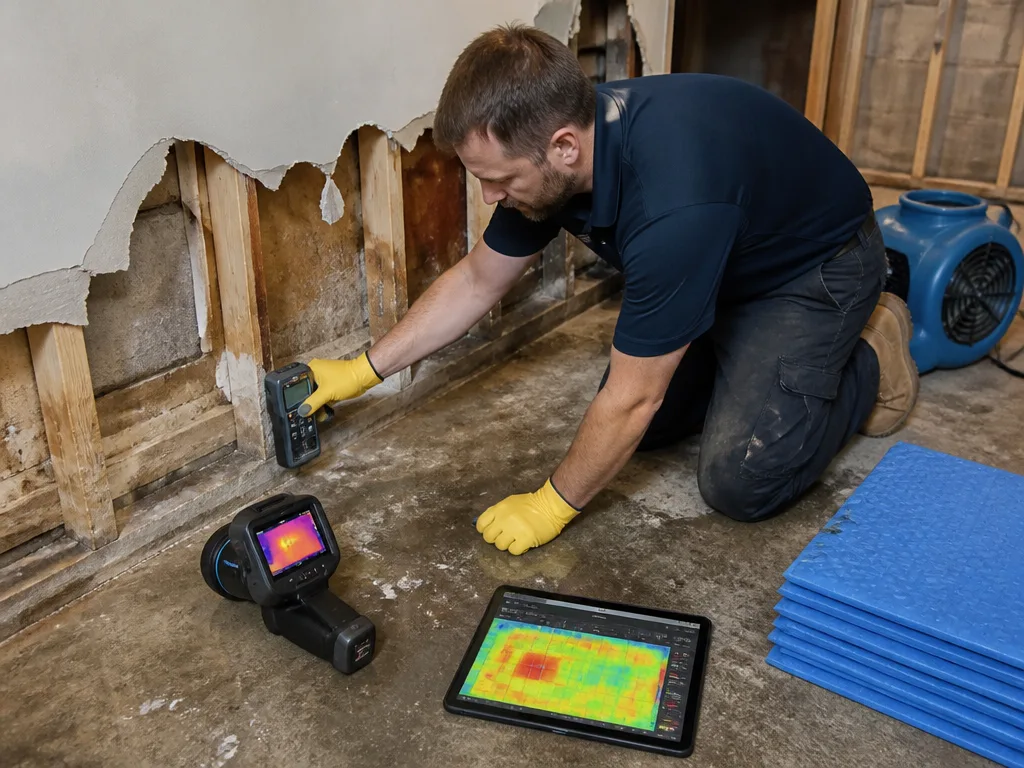
Moisture Detection is a diagnostic step in water restoration. Our restoration specialists use non-invasive moisture meters and thermal readings to trace water behind drywall, beneath flooring, and along the edges of cabinets and baseboards after an overflow. We record the readings room by room, so you receive a clear map showing which areas are wet, how wet they are, and which areas are dry and can be left alone. This service suits homeowners dealing with a bathroom or kitchen overflow, landlords managing rental units in Buffalo and nearby cities, and property managers who need documentation before insurance or repair decisions are made. It is also useful for anyone who notices a musty smell, a soft floor, or a stain that appeared days after the initial cleanup. Because drying is guided by the map, the job stays focused, and you are not paying to dry materials that were never wet.
Signs you need moisture detection
- Your bathroom floor feels soft or spongy underfoot days after an overflow was cleaned up.
- A musty, damp odor lingers in a room even though the visible water has been removed.
- Paint or wallpaper near the toilet is bubbling, peeling, or darkening along the baseboard.
- Baseboards or trim near the bathroom feel warm, swollen, or pull away from the wall.
- Water stains appear on a ceiling or wall in the room below a bathroom weeks after an overflow.
- Your flooring has started to cup, buckle, or lift at the seams near the toilet area.
Why choose Buffalo Toilet Overflow Cleanup?
- Our restoration specialists are based in Buffalo and know the older housing stock across the city well.
- We use moisture-sensing tools to read your walls and floors, not guesswork or visual estimates alone.
- Every finding is recorded and explained to you, so you understand the condition of your home before decisions are made.
- We work with homeowners, landlords, and property managers across Buffalo and nearby cities on tight schedules.
- Our crew treats your home with care, protecting floors and furnishings while we inspect and document the damage.
- We focus on saving what can be saved, so you are not paying to tear out materials that are still sound.
From phone call to finished job
Four straightforward steps. No upsells.
Over the phone we learn where the water came from, how much reached the floor, and whether anyone in the house has been exposed to it.
On arrival, a restoration specialist checks the flooring, the subfloor, and the wall base with moisture readings before any tearing out starts.
We pull standing water, remove soaked materials, then sanitize every surface the sewage touched so the room can dry out properly.
Once drying readings hit target, you get a written summary of the job and can call the team any time the office is open with questions.
What you get
You learn exactly where water went, so drying effort targets the wet spots instead of the whole room.
Materials that are dry and sound can often be kept, reducing the amount of demolition and rebuilding needed.
Early detection of hidden moisture helps prevent mold growth behind walls and under flooring.
A written room-by-room moisture map gives you clear documentation to share with your insurance provider.
Your home can return to normal use sooner because drying is focused and efficient rather than guessed.
You get a plain-language explanation of what is wet, what is dry, and what happens next.
Talk to a local pro now
(716) 721-0112Questions about moisture detection
Don't see your question? Call (716) 721-0112 and we'll answer it.
How do you find water that is hidden inside walls or under floors?
Our restoration specialists use non-invasive moisture meters and thermal imaging to read surfaces without tearing them open. The readings reveal where moisture has traveled behind drywall, under flooring, and along baseboards. We record each reading room by room so you can see exactly which areas are wet and which are dry.
Do I need Moisture Detection if the overflow was cleaned up already?
Often yes. Cleaning up visible water does not mean the water is gone from wall cavities, subfloors, or the room below. A moisture map confirms whether hidden dampness remains, which helps prevent soft floors, odors, and mold from developing later on in your Buffalo home.
How long does a Moisture Detection visit usually take?
Most visits take a focused block of time depending on the size of the affected area and how many rooms need reading. Our crew will walk you through the process as we go and explain what we are finding. You will receive the moisture map and our findings once the readings are complete.
Will you need to cut into my walls or floors to find the water?
Usually not. The initial mapping is done with moisture meters and thermal readings that work without opening surfaces. If we find wet materials that need access, we will explain why and discuss options with you before anything is opened. We aim to disturb as little of your home as possible.
Can you provide documentation for my insurance claim?
Yes. The moisture readings and room-by-room map create a clear written record of where water was found and how wet each area was. Many homeowners and property managers in Buffalo and nearby cities use this documentation when working with their insurance provider. Our crew can explain the report so you know what it shows.
Need moisture detection today?
Real local restoration specialists. Careful work. One call away.