
Ceiling Water Damage Repair for Buffalo Homes
Buffalo's freeze-thaw winters, ice dams, and older housing stock mean a roof leak or an upstairs overflow can turn a dry ceiling into a soggy, sagging problem almost overnight.
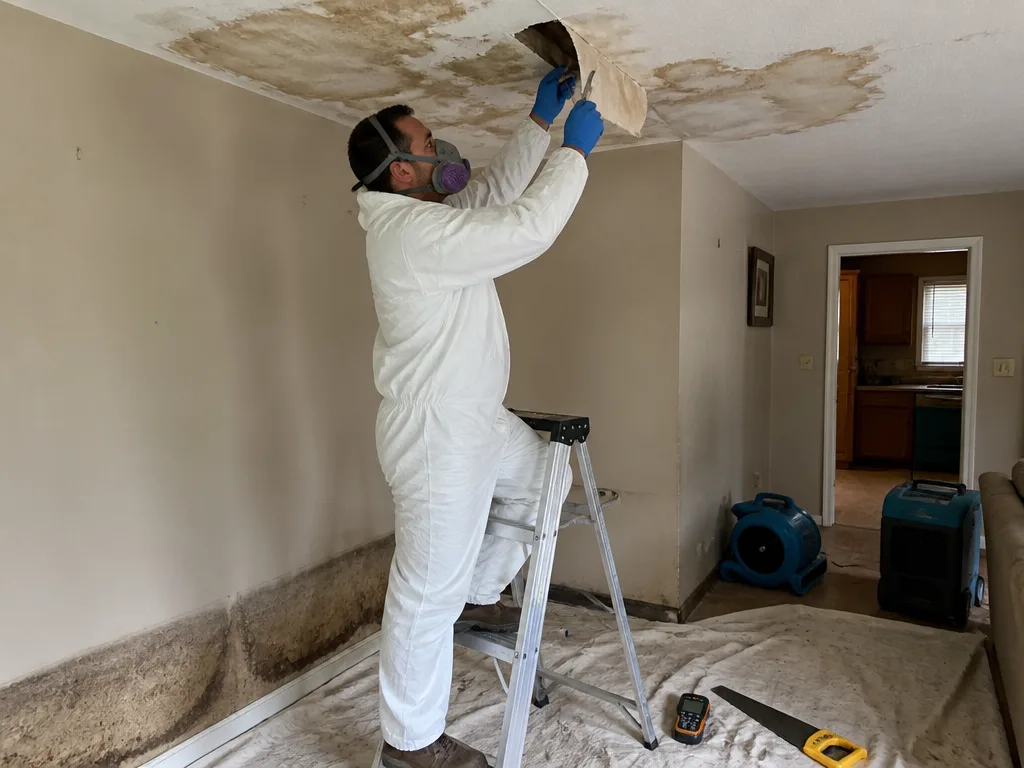
About ceiling water damage
Ceiling water damage work covers much more than the visible stain. Our crew checks the drywall, plaster, insulation, and framing above and around the affected area to locate moisture that has not shown up yet. We remove soaked ceiling materials that cannot dry properly, dry the remaining structure with the right equipment, and record moisture readings so you can see progress from one visit to the next. This service suits Buffalo homeowners, landlords managing rental properties, and small business owners in older buildings where a leak from an upstairs unit or the roof has reached a finished ceiling. If you are unsure whether your ceiling can be saved, our restoration specialists will walk you through what they find and the options that make sense for your space.
Signs you need ceiling water damage
- A brown or yellow ring is spreading across your ceiling after rain or snowmelt.
- Ceiling drywall or plaster feels soft, spongy, or bulges when pressed lightly.
- Paint on a recently painted ceiling is bubbling, peeling, or flaking away in patches.
- Dripping water or damp spots appear below an upstairs bathroom that recently overflowed.
- A musty smell lingers in a room directly beneath an area where water has come through.
- Hairline cracks or a sagging line have formed along one section of the ceiling.
Why choose Buffalo Toilet Overflow Cleanup?
- Our team is based in Buffalo and understands how freeze-thaw seasons affect older local homes.
- Restoration specialists explain their findings and your options in plain language before any work begins.
- We focus on drying and removing ruined materials rather than covering stains with paint alone.
- Buffalo Toilet Overflow Cleanup serves Buffalo and nearby cities with a hands-on, local approach.
- Each job includes moisture checks so you can see whether the space is truly drying out.
- Our crew protects floors, furniture, and the rooms you still use while the work is underway.
From phone call to finished job
Four straightforward steps. No upsells.
Over the phone we learn where the water came from, how much reached the floor, and whether anyone in the house has been exposed to it.
On arrival, a restoration specialist checks the flooring, the subfloor, and the wall base with moisture readings before any tearing out starts.
We pull standing water, remove soaked materials, then sanitize every surface the sewage touched so the room can dry out properly.
Once drying readings hit target, you get a written summary of the job and can call the team any time the office is open with questions.
What you get
Stopping the water source and drying the structure early limits how far damage spreads through your home.
Removing soaked materials reduces the odor and mold growth that often follows standing moisture.
Your ceiling is less likely to collapse once sagging, weakened material has been properly removed.
Clear moisture readings give you a documented picture of what dried out and what did not.
Fewer rebuild surprises happen when hidden moisture is found before new drywall goes up.
You regain usable rooms faster when drying begins right after the leak rather than weeks later.
Talk to a local pro now
(716) 721-0112Questions about ceiling water damage
Don't see your question? Call (716) 721-0112 and we'll answer it.
Can a water-stained ceiling be dried out instead of replaced?
Sometimes. If the drywall or plaster is still firm and the moisture was caught early, drying may save the material. Our restoration specialists check firmness, moisture levels, and the material type before recommending whether to dry or remove it. Heavily soaked or sagging sections usually need to come out.
How soon should I call after noticing a ceiling leak in Buffalo?
As soon as you see staining, dampness, or sagging. Water keeps spreading inside walls and ceilings even after the dripping stops, so early action limits how much material has to be removed. Call us from anywhere in Buffalo and we will discuss what you are seeing and the next steps to take safely.
Will you tell me what caused the ceiling water damage?
Yes. We look for the path the water took and share what we observe during the visit, such as a roof opening, an overflow from an upstairs bathroom, or condensation buildup. If the source needs a different professional to repair, we will tell you so you can plan the fix with the right people.
Do I need to move furniture before your crew arrives?
It helps to clear valuables and small items from the affected room and cover anything you cannot move. Our crew will protect floors and nearby furnishings during the work, but moving fragile items out of the way reduces the chance of accidental damage and keeps the process moving smoothly for everyone involved.
Is mold always present after ceiling water damage?
Not always, but it can begin within a day or two when materials stay wet. That is why drying and removing soaked material matters so much. Our restoration specialists check for visible growth and musty odor, and they will explain what they find so you understand the condition of your home.
Need ceiling water damage today?
Real local restoration specialists. Careful work. One call away.